Trees rarely die overnight. Most give warning signs months or even years before they fail. Learning to spot these signs can help you save a tree that is struggling or remove a dangerous tree before it falls. Here are the most common signs that a tree is dying, plus a few simple checks you can do on your own.
1. Dead or Bare Branches
Branches with no leaves during the growing season are a clear sign of trouble. A few dead twigs are normal, but large dead limbs or dieback at the top of the crown point to a bigger problem. Dead branches can also fall without warning.
2. Thin or Small Leaves
If your tree has fewer leaves than it used to, or the leaves are smaller and paler, the roots may be struggling. Early leaf drop in summer is another warning sign.
3. Bark Problems
Healthy bark is firm and attached. Watch for:
- Bark peeling away from the trunk in large sections
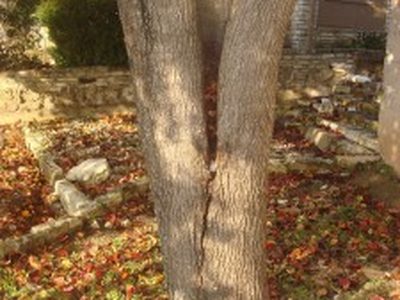
- Deep vertical cracks
- Cankers, which are sunken or dead areas on the bark
- Oozing sap or dark, wet stains
4. Fungus and Mushrooms
Mushrooms or shelf fungus growing at the base or on the trunk often mean the wood is decaying inside. In Austin, a gray or brown crust on oak bark can signal hypoxylon canker, a fungus that attacks drought stressed oaks.
5. Leaning or Lifting Soil
A tree that suddenly starts to lean, or has cracked or raised soil on one side of the base, may have damaged roots. This is a serious hazard, especially near a house.
6. Hollow or Soft Wood
Cavities, soft spots and hollow sounds when you tap the trunk can mean internal decay. Some hollow trees stay strong for years, but others are close to failure.
7. Pest Activity
Small holes in the bark, piles of sawdust at the base and heavy insect activity often point to borers or other pests that attack weak trees.
A Simple Scratch Test
To check if a small branch is alive, scratch the bark lightly with your thumbnail. Green, moist tissue underneath means the branch is alive. Brown, dry tissue means that part is dead. Test a few branches in different parts of the tree to see how far the problem goes.
Common Causes in Austin
- Drought: Long, hot summers stress trees, especially on thin soil.
- Oak wilt: A deadly disease of live oaks and red oaks in Central Texas.
- Root damage: Construction, trenching and soil compaction cut off water and air.
- Poor planting: Trees planted too deep can slowly decline.
- Old age: Short lived trees like Arizona ash often decline after a few decades.
What You Can Do Right Now
While you wait for an arborist, there are a few simple steps that can help a stressed tree. Give the root zone a long soak at the outer edge of the canopy when it is dry, rather than spraying the trunk. Spread mulch over the root zone to hold moisture, but keep it away from the bark. Keep vehicles and soil piles off the root area. Do not fertilize heavily until you know the cause, because the wrong treatment can add stress.
Can a Dying Tree Be Saved?
Sometimes, yes. Trees stressed by drought, poor soil or pests can often recover with deep watering, tree fertilization and corrective pruning. Trees with major decay, severe root damage or advanced oak wilt may be too far gone. In those cases, tree removal protects your home and family.
When a Dying Tree Needs a Pro
Call an arborist if you see large dead limbs, a new lean, fungus at the base or a tree near your home showing several warning signs at once. Austin Complete Tree Service has inspected Austin trees since 1978. Our certified and experienced arborists offer full arborist services, from diagnosis to treatment.
Dying Tree Questions
How can I tell if my tree is dead or just dormant?
Use the scratch test on several branches. Green tissue under the bark means the branch is alive, even if it has no leaves yet.
Is a tree with a hollow trunk dangerous?
It can be. Some hollow trees stay strong, but others are close to failure. An arborist can check how much solid wood remains.
Should I remove a dying tree right away?
If it is near a house, a walkway or a play area, have it checked soon. Dead trees become more brittle and dangerous over time.
Related reading: tree removal cost in Austin, deep root fertilization pros and cons and saving a split tree with cabling and bracing.