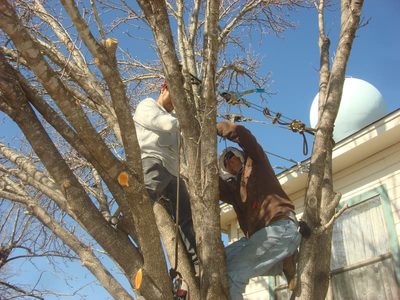
A crack in a big tree can be alarming. Maybe you noticed a split where two large stems meet, or a heavy limb that sags lower each year. Before you decide to remove the tree, it is worth knowing about cabling and bracing. These methods can give weak trees the support they need to stay standing for many more years.
What Is Tree Cabling?
Tree cabling uses strong cables installed high in the canopy to connect two or more stems or limbs. When wind pushes the tree, the cable helps share the load, so a weak union is less likely to split apart. Cables are usually placed about two thirds of the way up from the weak point toward the top of the limbs.
What Is Tree Bracing?
Bracing places threaded steel rods through the stems near a weak fork or crack. The rods pin the two sides together so the split cannot open wider. Bracing is often combined with cabling for the best support.
Signs a Tree May Need Support
- Tight V shaped forks: Two stems of similar size growing at a narrow angle.
- Included bark: Bark trapped inside a fork, which weakens the joint.
- Cracks or splits: Visible splits where stems meet.
- Heavy, long limbs: Branches that reach far out over roofs or driveways.
- Past storm damage: Trees that have already lost a limb in a storm.
When Can a Split Tree Be Saved?
Not every split tree should be cabled. A good candidate usually has:
- A healthy root system and a sound trunk base
- Little or no decay at the split
- A strong, healthy crown with plenty of leaves
- Real value to the property, such as shade or beauty
Trees with deep rot, failing roots or large dead sections are usually not good candidates. In those cases, removal is often the safer choice.
Static vs Dynamic Systems
Hardware comes in two main styles. Rigid steel systems hold big, heavy stems firmly in place. Flexible rope systems stretch slightly, which lets a younger tree keep moving and build its own strength. Our arborist picks the style that suits the size and age of your tree.
Pruning With Cabling
Cabling often works best with pruning. Reducing the weight of long limbs takes stress off the weak point. Removing dead wood also lowers the risk of branches breaking.
Trees That Often Need Support in Austin
In Austin yards, the usual candidates are broad live oaks with long horizontal limbs, pecans with tight double trunks and soft wooded trees such as Arizona ash and silver maple that crack under ice. Older shade trees in central Austin neighborhoods, many of them protected by city rules, are often worth saving with cables instead of removing.
Cabling for Safety Over Homes
Even when a tree is healthy, a heavy limb over a bedroom, driveway or play area deserves extra care. A cable can hold that limb in place during wind and ice, giving you peace of mind during storm season.
Caring for a Cable System
Like any hardware, cables wear over time. Plan a check every few years, and always after a big storm. During an inspection, an arborist looks for:
- Worn or loose hardware
- Cables that have become too tight or too loose
- New cracks or decay
- Tree growth that changes how the system works
Does Cabling Hurt the Tree?
Installing hardware creates small wounds, but healthy trees seal over them. The support a cable system provides far outweighs this small injury. For oaks in Central Texas, install cables outside the spring oak wilt season when possible, and paint any fresh cuts.
Expert Cabling in Austin
Austin Complete Tree Service has cabled and braced trees across Austin since 1978. Our certified and experienced arborists check each tree, explain the options and install systems that follow industry standards. Learn more about our tree cabling service or see the tree cabling gallery.
Cabling and Bracing Questions
Can I install a tree cable myself?
It is not safe. Cable work happens high in the canopy and needs the right hardware, placement and climbing gear. A badly placed cable can make a weak fork worse.
Can cabling stop a tree from falling over?
Cabling supports weak unions and limbs, but it cannot fix a tree with failing roots or a rotten trunk base.
Is cabling cheaper than removal?
Often it is, and it saves a valuable tree. The best choice depends on the tree's health and what lies beneath it.
Related reading: what to do when a tree falls on your house, signs a tree is dying and the Austin heritage tree ordinance.