Tree Cabling
Tree cabling adds support to trees with weak, cracked or heavy limbs. Austin Complete Tree Service installs top quality cable bracing that reinforces the tree's standing structure. A well placed cable can save a valuable shade tree that might otherwise split apart in the next storm.
Cabling also protects the people, homes and cars under the tree. If you are not sure whether your tree needs cabling, our certified and experienced arborists can check it and explain your options.
When a Tree Needs Cabling
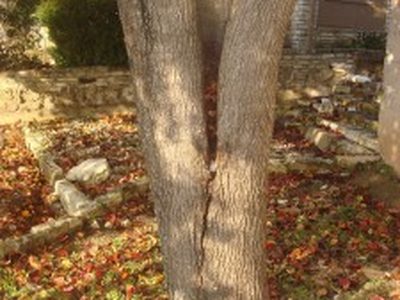
- Weak crotch: Two or more large stems join in a tight V shape that can split.
- Cracks or splits: A crack has formed where the main stems meet.
- Heavy foliage: Long, leafy limbs put extra weight on the trunk.
- Storm damage: Wind, rain, snow or ice has weakened the tree's structure.
- Included bark: Bark is trapped inside a narrow union, which weakens the joint.
- Long limbs over targets: Heavy branches reach over the roof, a driveway or a play area.
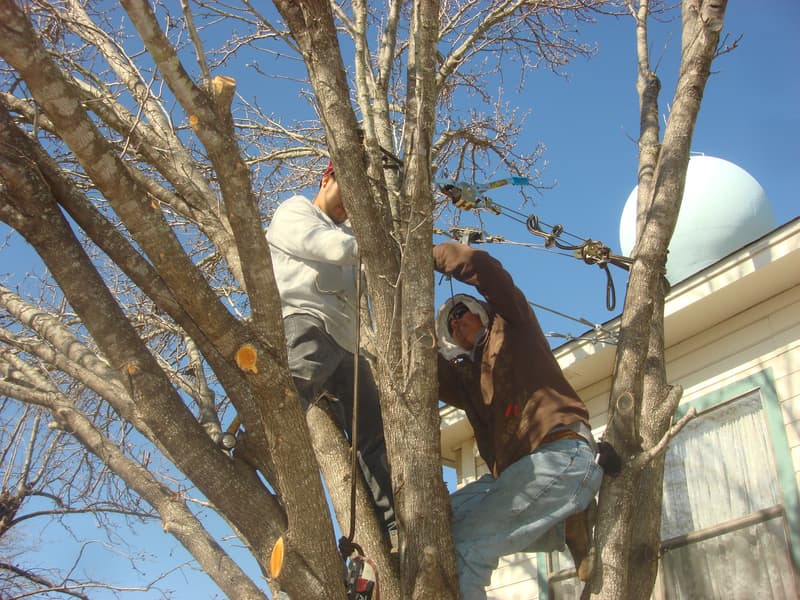
How Tree Cabling Works
A cable system links two or more stems so they share the load during wind and storms. We install high strength steel cable high in the canopy, usually about two thirds of the way from the weak union to the top of the limbs. The cable stays slightly loose in calm weather and tightens when the tree moves. That lets the tree keep swaying naturally while it is protected from sudden, extreme stress.
Cabling and Bracing Options
Static Cabling
Static systems use steel cable and hardware that pass through the limbs. They give strong, lasting support to large trees and heavy stems.
Dynamic Cabling
Dynamic systems use strong synthetic rope that stretches a little. They are good for younger trees that still need to build their own strength.
Bracing Rods
Bracing rods are threaded steel rods installed lower in the tree. They hold split stems together and stop cracks from spreading. Rods are often used with cables for the best support.
Our Cabling Process
Our arborist first checks the whole tree. We look for decay, root problems and other defects, because cabling a tree that is failing at the base will not help. If the tree is a good candidate, we plan where each cable or rod should go. Our climbers install the hardware, prune any dead or heavy limbs and test the system. We then show you where the cables are and how to spot problems later.
Cabling vs Removal
Cabling is a good choice for healthy trees with one weak point. It is not a cure for a tree that is rotten, dying or failing at the roots. Our arborist weighs the value of the tree, its health and what lies under it. A grand old live oak shading your home is often worth saving. A weak, short lived tree with deep decay may be safer to remove and replace. We explain both paths clearly so you can choose with confidence.
Trees That Often Need Support
In Austin we cable many live oaks, pecans, cedar elms and Arizona ash. Live oaks grow long, low limbs that get heavy over time. Pecans often form tight forks between large stems. Arizona ash and silver maple have softer wood that splits more easily in wind and ice.
Inspecting Cables Over Time
Cable systems need checkups. Trees grow, hardware wears and storms can stretch cables. We suggest an inspection every few years and after any major storm. During a checkup we look for wear, tighten or replace hardware and adjust the system as the tree grows.
Saving Austin Shade Trees
In Austin, a mature live oak or pecan can take generations to replace. Many of these trees have wide, heavy limbs that split during ice storms and spring winds. Since 1978 our arborists have cabled and braced trees in neighborhoods across Austin, from old central homes to Hill Country lots. We follow tree care industry standards for hardware and placement, so your cabled tree has real support where it needs it most.
When Cabling Is Not Enough
Some trees are too damaged for cabling and need tree removal to prevent harm. Most cabled trees also benefit from tree trimming to reduce weight. See our work in the tree cabling gallery.
Tree Cabling Questions
Does cabling hurt the tree?
Cabling makes small holes for the hardware, which a healthy tree seals over. The support it gives far outweighs this small wound.
How long does a tree cable last?
Steel cable systems can last many years with regular checks. We suggest an inspection every few years and after strong storms.
Can cabling fix a tree that is already split?
Bracing rods and cables can often hold a fresh split together if the tree is healthy. Old splits with decay may not be safe to save.
Will a cable be easy to see?
Cables are installed high in the canopy and are hard to notice once the tree leafs out.